

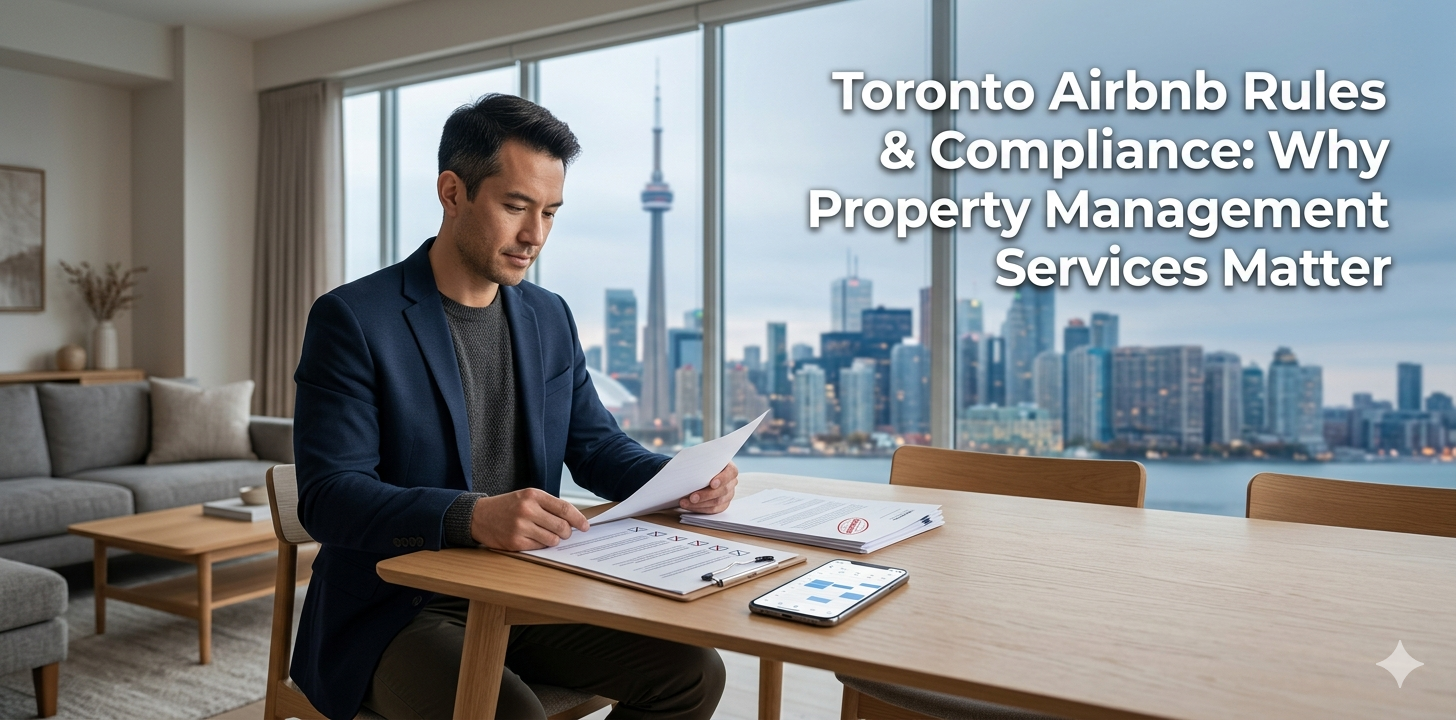
In Toronto, short-term rental not casual side income anymore; it is a regulated micro-hospitality system. Many hosts enter thinking listing + photos are enough, but the compliance layer is where most fail, and fail fast. This article breaks that gap clearly, because missing one rule here directly means delisting or penalties.
Real-World Context (Where Hosts Actually Struggle)
Toronto tightened enforcement heavily in recent years. Not just policy on paper—active monitoring, platform data sharing, complaint-based inspections.
Typical ground issues:
- Hosts renting investment condos (non-primary residence → violation)
- Listings were removed suddenly due to expired registration
- Neighbour complaints triggering enforcement action
- Tax confusion despite platform deductions
At this stage, Airbnb property management services in Toronto are not about convenience; it is about staying operational.
Regulatory Framework (What Actually Applies)
Under the City of Toronto short-term rental by-law:
- Rental must be less than 28 days
- Property must be the primary residence
- Registration number mandatory for listing
- Platforms like Airbnb must verify compliance
Additional layers:
- Municipal Accommodation Tax (MAT) ~6%
- Fire safety compliance (aligned with Ontario Fire Marshal)
- Structural compliance under the Ontario Building Code
Important—condo bylaws operate separately. Even a compliant listing can be illegal under building rules.
Where Compliance Breaks (Observed Failures)
- “Primary Residence” Misinterpretation
Many assume an occasional stay qualifies. City definition stricter—documentation required. - Registration Gaps
Renewals missed, listing auto-removed without warning. - Tax Blind Spots
Even when Airbnb collects MAT, income reporting is still required under the Canada Revenue Agency. - Complaint-Based Enforcement
One noise complaint escalates into an inspection → potential suspension. - Condo Restrictions Ignored
Internal bylaws override listing legality. This is one of the most common shutdown reasons.
This is why hosts shift toward professional Airbnb property management services in Toronto after initial compliance failure.
What Property Management Services Actually Handle
Not just cleaning and check-in—the real role is regulatory + operational control.
Compliance Management
- Registration filing, renewal tracking
- Primary residence documentation validation
- Monitoring city updates
Risk Control
- Guest screening systems (reducing party-risk bookings)
- Occupancy and stay duration controls
Financial Alignment
- MAT verification
- Income tracking for tax reporting
Building Compliance
- Condo bylaw assessment before listing
- Handling neighbour complaint thresholds
Listing Governance
- Ensuring listing content matches legal limits (occupancy, usage)
This is where Best Airbnb property management Services Toronto differentiate—less about hospitality, more about regulatory shielding.
Practical Workflow (Managed vs Self-Managed)
Self-managed (typical reality):
- Setup done correctly initially
- Monitoring weak → compliance drift → penalty risk
Managed model:
- Eligibility validation (primary residence + bylaws)
- Registration + documentation
- Listing optimization within legal limits
- Continuous monitoring (guests + compliance)
- Financial and tax tracking
The difference is not setup—it is the consistency of monitoring.
Regional Comparison (Why Toronto Is Different)
- Vancouver → similar strict rules
- Montreal → provincial licensing involved
- Smaller Ontario cities → still evolving
Toronto enforcement is among the strictest currently.
Trade-Offs (Clear, No Marketing Angle)
Using management services:
- Cost: ~15–30% revenue
- Benefit: compliance stability, reduced risk exposure
Self-managing:
- Higher margin
- Requires continuous regulatory awareness + operational discipline
There is no “better” option universally—it depends on host’s capability to manage compliance actively.
FAQs
Q1. My listing got removed even though I registered—what went wrong?
Usually, a mismatch between registration details and listing info (address, host name, or expired renewal). City of Toronto systems cross-check with platform data.
Q2. Airbnb already deducts tax, do I still need to report income?
Yes. MAT is separate. You must declare rental income to the Canada Revenue Agency, including expenses and earnings.
Q3. My condo allows long-term rentals but not Airbnb—can I still list?
No. Condo bylaws override your ability to operate a short-term rental, even if the city permits it.
Q4. I only rent occasionally. Do rules still apply?
Yes. Even one short-term rental requires registration and compliance if under 28 days.
Q5. What triggers inspections or penalties?
Most commonly: neighbour complaints, repeated short stays suggesting commercial use, or missing registration data.
Q6. Can I manage everything myself without services?
Possible, but requires active tracking of rules, taxes, guest behaviour, and documentation. Most failures happen due to inconsistency, not lack of knowledge.
Closing Note
EasyHosts operates in a market where compliance is not static—it shifts with enforcement patterns, neighbour sensitivity, and platform integration rules. The real challenge in Toronto Airbnb operations is not starting correctly, but staying compliant every single day.
That is where structured management systems—not just basic hosting—start making an operational difference.
 Find Us on Google Maps
- You May Also Like – How an Airbnb Management Company Handles Guest Communication?
